





Bowling Green State University Athletics
Behind the Scenes With the BGSU Athletic Training Program
January 28, 2008 | General
Jan. 28, 2008
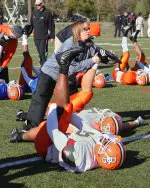
BY JARED NIEDERMIER, BGSU Athletic Communications - For a university to have a successful athletic program it takes a combination of aspects ranging from skill and athleticism to practice and hard work from its' coaches and players. Ask anyone involved and they will tell you it also takes a great deal of preparation. Often an overlooked part of that preparation is done by the athletic trainers. Whether the injury is mild or severe, these people are responsible for treatment and getting the players back on the playing field to compete.
The Head Athletic Trainer/Director of Sports Medicine at Bowling Green State University is Doug Boersma, a fifth year veteran of the job. He overlooks all 18 of the varsity sports with a special focus on football and both men's and women's golf. Boersma has three assistants in the department, Annette Davidson, Jeff Curley, and Chad Young as well as three graduate assistants and a student program of 35 undergraduates. Boersma also is involved in numerous on-campus organizations such as InfoSeek, a committee which governs security measures throughout campus such as the HIPPA laws.
"It's really about having campus involvement," Boersma said.
Don't plan on the head of this department leaving Bowling Green anytime soon as he prefers the college level of training over that of the professional ranks.
"This is exactly where I want to be," smiled Boersma.
He gets his perks by dealing with the student-athletes on a personal level and influencing their lives. Davidson agreed.
"You have to remember why you're here, for the student-athletes," she said. Davidson seems to be in the right profession as she has a reputation for being a competitive person. As well as being an assistant athletic trainer she is the coordinator of the Wellness Committee which specializes in helping students deal with anything from drug use to dealing with abuse.
Previously she was an athletic trainer at the Olympic Training Center in Colorado Springs, Colorado and worked in part with the Goodwill Games in New York City. She has done treatments with some of the top athletes in the world including three-time Olympic Gold Medalist Gail Devers.
A typical day for these athletic trainers will be arriving to work at 6:00 in the morning to give treatments to injured student-athletes prior to the start of their classes for that day. Among the healing process they also report to the respective coaches of the student-athletes about the progress toward getting them back in action. Most commonly these trainers deal with ankle and knee injuries usually in the mold of sprains or ruptures.
No matter what the injury Curley believes you need to treat them all as being serious.
"Error on the side of caution," said Curley, the athletic trainer for hockey, baseball, and women's tennis. He mentioned that he sees a lot of contusion related injuries from hockey usually resulting from the constant collisions endured from the game. Being a former head athletic trainer at Adrian College in Michigan, he enjoys being able to concentrate on a few sports rather than all of them. Curley credits his love of the job to seeing the growth in his student-athletes and the connections he makes with them.
"And the wins too," he said.